

Arizona is moving closer to becoming a crypto-friendly state. State Senator Wendy Rogers has introduced a new set of bills to change how Bitcoin, cryptocurrencies, and blockchain technology are taxed in Arizona.
These bills aim to lower tax pressure, give clear legal rules, and make the state more attractive for blockchain companies and crypto investors. If approved, the changes could reduce costs for crypto users and businesses while encouraging innovation and growth in the blockchain sector.
Overall, the proposals show Arizona’s effort to support digital assets and create a friendlier environment for crypto-related activities.
Key Bills Explained: SB 1044, SB 1045, and SCR 1003
Arizona lawmakers have introduced two bills and one constitutional resolution to improve rules for digital assets.
- SB 1044 aims to remove property taxes on virtual currencies like Bitcoin, making crypto ownership simpler and cheaper.
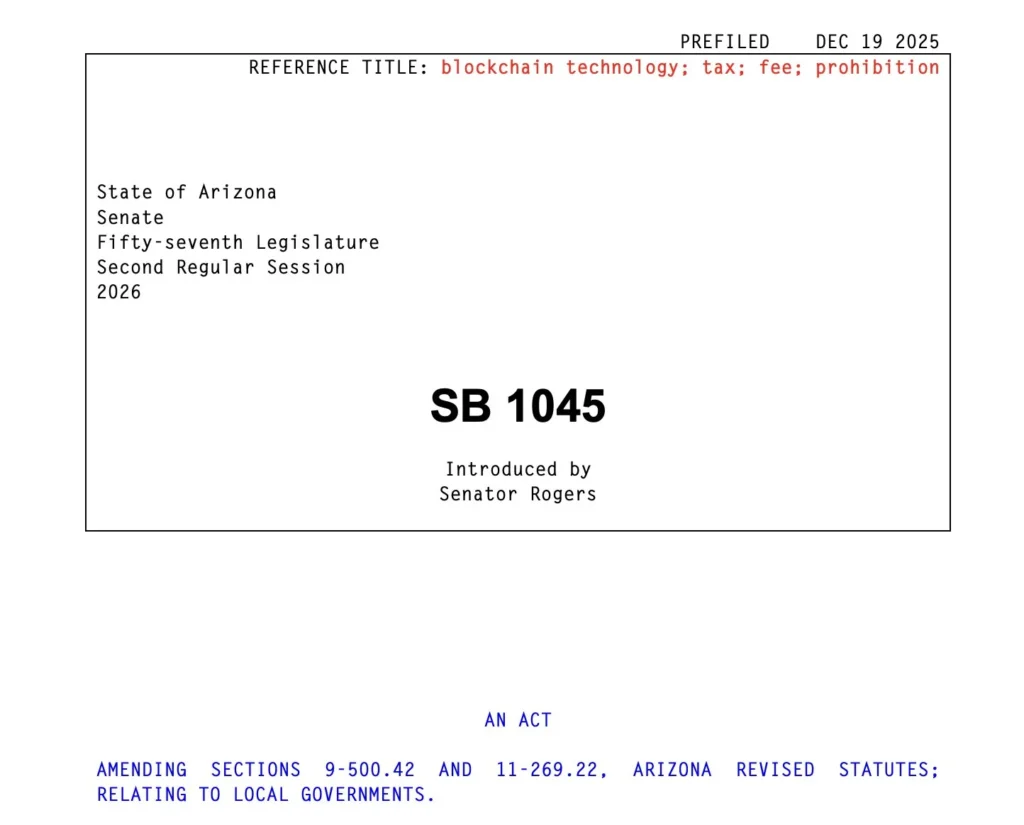
- SB 1045 focuses on blockchain technology and would stop cities and counties from charging taxes or fees to people who run blockchain nodes.
- SCR 1003 proposes changing Arizona’s constitution to clearly state that digital assets are not subject to property taxes.
Together, these measures would give crypto users and blockchain businesses clearer rules and a more supportive tax environment in Arizona.
Voter Approval Required for Crypto Tax Exemption
Not all of Arizona’s crypto bills will become law right away. SB 1045 can pass through the state legislature and become law if the governor signs it. However, SB 1044 and SCR 1003 need approval from Arizona voters.
This is because SCR 1003 would change the state constitution, which cannot happen without a public vote. Arizona voters would decide on this proposal during the November 2026 general election.
If voters support the measure, cryptocurrencies like Bitcoin would be excluded from property taxes. Because of this, public opinion will play a major role in deciding whether the crypto tax exemption becomes law.
Protection for Blockchain Node Operators
One of the key proposals in Arizona is SB 1045, which focuses on protecting people and businesses that run blockchain nodes. Blockchain nodes are important because they help keep networks like Bitcoin secure and running smoothly.
If this bill is passed, cities, towns, and counties will not be allowed to charge special taxes, fees, or penalties on node operators. This means local governments cannot target blockchain infrastructure with extra costs.
The goal of SB 1045 is to support decentralized networks by giving node operators clear legal protection. By reducing financial pressure, Arizona hopes to encourage more blockchain activity and innovation within the state.
Arizona’s Growing Role in Crypto Policy
Arizona is becoming an important state in the crypto space. It is one of the few U.S. states that allows the government to take control of digital assets, such as Bitcoin, that have been left unused for three years, instead of selling them right away. This shows the state is trying to handle crypto in a more thoughtful way.
Arizona has also looked at creating a Bitcoin and Digital Assets Reserve. However, a related bill supported by Senator Wendy Rogers was vetoed by Governor Katie Hobbs due to concerns about price volatility. Senator Rogers has said she plans to bring similar proposals again in future sessions.
How Arizona Compares With Other States
Arizona’s crypto-friendly efforts come as other U.S. states explore different rules for digital assets. For example, Texas and New Hampshire have passed laws to create digital asset reserves, helping manage and protect cryptocurrencies.
Ohio introduced a bill to exempt crypto transactions under $200 from capital gains tax, but the proposal has not progressed. In New York, lawmakers suggested a small excise tax on digital asset transactions, yet that bill has also stalled.
At the federal level, Senator Cynthia Lummis from Wyoming has proposed exemptions for small crypto transactions, showing that interest in crypto-friendly rules is growing nationwide and gaining attention beyond individual states.