
The U.S. government has once again moved part of its seized cryptocurrency holdings, transferring about $177,000 worth of Bitcoin to Coinbase Prime.
On-chain data shows the transaction included 2.4 BTC sent from wallets tied to previously confiscated assets, reflecting ongoing asset management activity by federal authorities.
Data from Timechain Index indicates that these funds are linked to the Glenn Olivio case, a lesser-known but significant seizure.
This case is often analyzed alongside major confiscations such as the Silk Road seizure, which remains one of the largest crypto enforcement actions.
These movements highlight how authorities continue to track, manage, and potentially liquidate seized digital assets.
Smaller Transfers Also Observed
This recent transaction follows a smaller movement recorded last month, when the U.S. government transferred approximately 0.04 BTC, valued at just over $2,500 at the time.
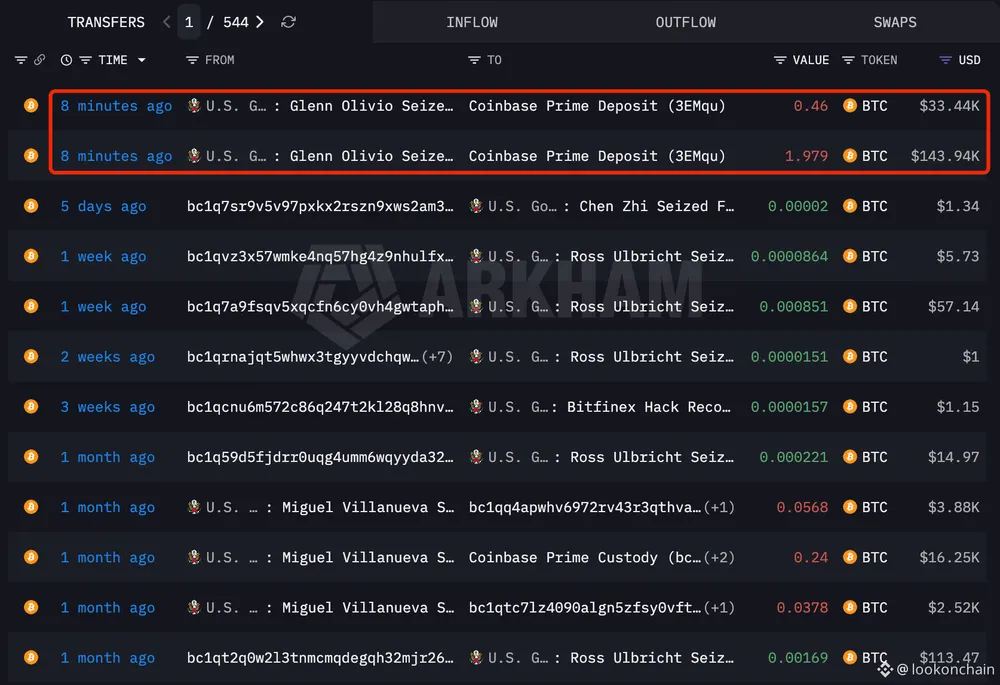
According to on-chain data, those funds were linked to a separate seizure case involving Miguel Villanueva. The activity indicates that authorities are consistently managing multiple confiscated assets across different cases.
It also highlights how smaller Bitcoin transfers continue to play a role in steadily contributing to the government’s expanding crypto reserves over time.
Strategic Bitcoin Reserve Continues to Grow
These transfers come as U.S. authorities continue expanding their Strategic Bitcoin Reserve, launched in March 2025 to manage confiscated digital assets more effectively.
The reserve has grown significantly, now holding around 328,370 BTC, largely accumulated through forfeitures linked to criminal investigations.
This steady increase highlights the government’s evolving approach toward crypto asset management, focusing more on long-term holding rather than immediate liquidation, signaling confidence in Bitcoin’s potential future value and its role in financial strategy.
More: Crypto Market Fears Crash as U.S. Captures Maduro
Shift in Government Strategy
Historically, U.S. agencies sold confiscated Bitcoin through auctions soon after seizures. However, recent activity shows a clear change in approach.
Authorities are now more likely to hold digital assets instead of quickly liquidating them. This shift highlights a growing belief in Bitcoin’s long-term value and stability.
By retaining these assets, the government may be positioning itself to benefit from future price growth while also strengthening its broader financial and strategic reserves in the evolving digital economy.