

South Korean lawmakers have set a firm deadline of December 10 for financial regulators to submit a draft bill on stablecoin regulation. They also warned that if regulators fail to deliver the draft on time, the National Assembly will step in and prepare the legislation on its own.
The pressure from lawmakers has increased because internal disagreements are still slowing down the process. One of the major points of conflict is how much control banks should have when issuing stablecoins pegged to the Korean won. These differences in opinion have delayed one of the country’s most important digital asset policies.
According to a report from Maeil Business Newspaper, the ruling party sent a last minute notice to financial regulators, asking them to submit the stablecoin framework before the deadline. This notice shows how urgent and important the government considers the creation of clear stablecoin rules.
Kang Joon Hyun, a lawmaker from the Democratic Party, said that if the government does not provide the bill by December 10, the political affairs committee will move ahead and prepare the legislation themselves. If the draft arrives on time, the bill is expected to be reviewed and discussed during the National Assembly’s extraordinary session scheduled for January 2026.
Soon after this announcement, the Financial Services Commission issued a statement. The regulator clarified that no final decision has been made about forming a consortium to issue stablecoins backed by the Korean won, even though the topic has been discussed earlier. The commission also confirmed that stablecoin regulation was a major topic during a recent meeting between the government and the ruling party. Both sides agreed to speed up the preparation of the government’s draft bill.
No agreement yet on a bank led model
There is still no agreement on whether banks should take the lead in issuing stablecoins. The Financial Services Commission stated that no final decision has been made on allowing a consortium where banks hold 51 percent or more ownership. This update comes after earlier reports suggested that South Korea may reach the end of the year without a clear framework for locally issued stablecoins. The main reason is the ongoing disagreements about how much control banks should have.
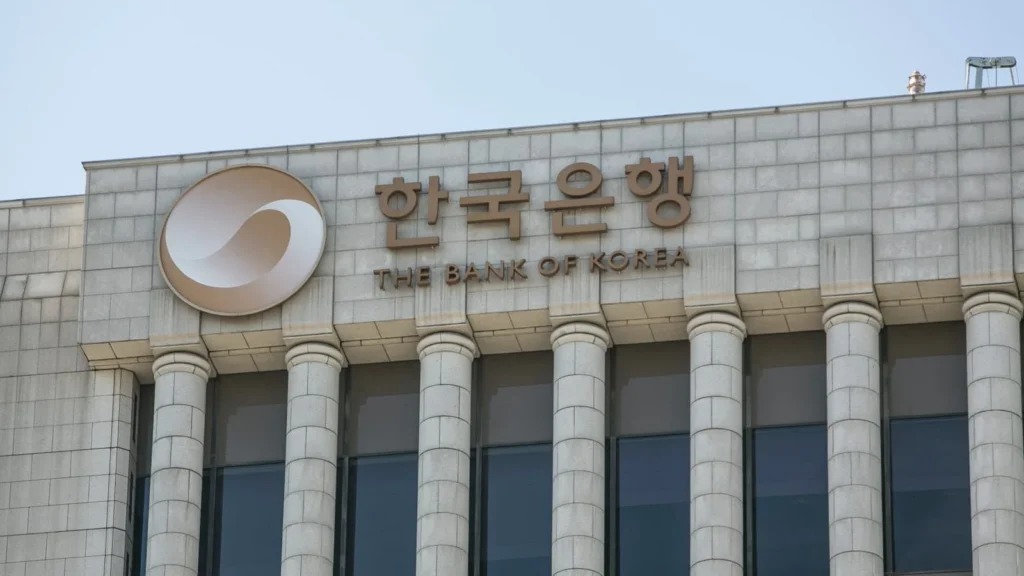
The Bank of Korea and financial regulators have been in conflict for months over this issue. The central bank believes that banks should own at least 51 percent of any company issuing stablecoins backed by the Korean won. They argue that banks are more experienced and operate under strict regulations, making them more suitable to handle stablecoin operations.
On the other hand, regulators prefer a more open and diverse ecosystem. They do not want stablecoin issuance to be controlled mainly by banks, as it might limit innovation and reduce opportunities for private companies and blockchain based projects.
Why is majority bank ownership being discussed
The Bank of Korea believes that banks should hold a majority stake in stablecoin issuers because they already operate under strict regulatory supervision. A bank official explained that banks have strong experience in handling Anti Money Laundering procedures, which makes them a reliable choice for managing stablecoins safely.
However, many industry experts do not fully agree with this view. They believe that instead of giving banks most of the control, the country should focus on creating clear and transparent rules for all stablecoin issuers. These experts argue that well defined regulations can help maintain trust and stability without limiting innovation.
They also noted that it would be more helpful if the Bank of Korea provided detailed guidelines on how risks can be managed and what qualifications a stablecoin issuer must meet to be considered trustworthy.
This topic came up again during Monday’s meeting. An official from Kang Joon Hyun’s office explained that the ruling party is trying to find a balanced solution. They want to protect the stability of the Bank of Korea’s monetary system while also supporting the level of innovation encouraged by the Financial Services Commission.
South Korea’s Position in the Global Crypto Race
Many countries around the world are already developing or have introduced stablecoin regulations. Japan, for example, has a stablecoin law in place that provides clear guidelines for issuers and protects users.
The European Union has implemented MiCA, a comprehensive framework for digital assets, while Singapore has established strong rules for digital payments to ensure safety and compliance. In the United States, federal stablecoin regulation is still under debate, leaving some uncertainty for the market.
If South Korea delays the introduction of its stablecoin bill, it risks falling behind these global leaders in the digital asset space. However, if the draft bill is passed soon and implemented effectively, the country has the potential to become a major player in Asia’s regulated digital asset market. Strong regulation could attract investment, support innovation, and position South Korea as a hub for safe and reliable digital finance.