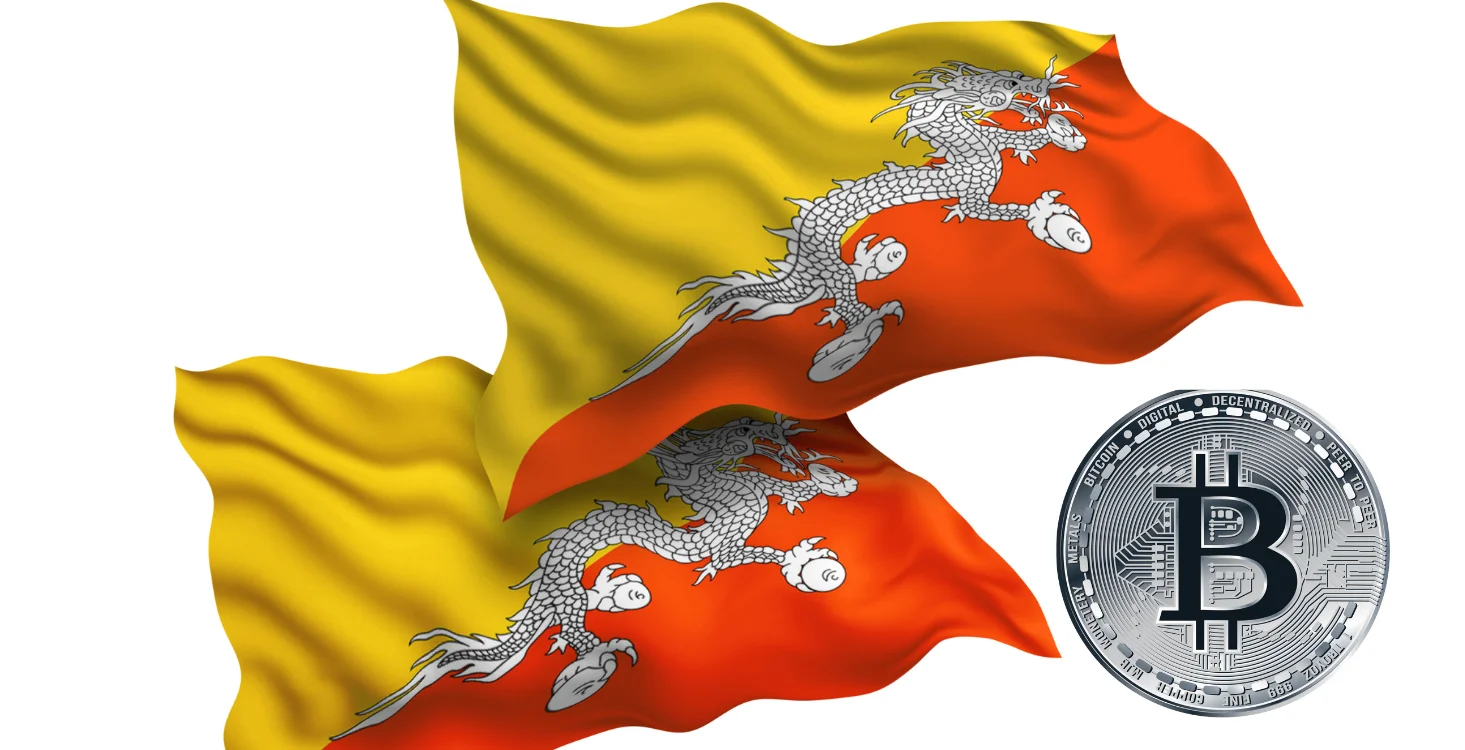
Bhutan Launches Gold-Backed TER Token as part of its national blockchain strategy, introducing a sovereign digital asset under the Gelephu Mindfulness City initiative and aligned with the Kingdom’s official regulatory framework.
With this launch, Bhutan becomes one of the few countries actively moving into state-backed tokenized assets, aiming to bridge the gap between traditional gold reserves and next-generation financial technology. The project is designed to modernize Bhutan’s asset management while opening the doors to a more transparent, efficient, and globally accessible digital economy.
According to the official announcement released on Thursday, TER is built on the high-performance Solana blockchain, enabling fast, low-cost, and secure transactions. The token will be issued, distributed, and safeguarded by DK Bank, Bhutan’s first fully licensed digital bank, ensuring compliance and institutional-grade custody for investors.
With TER, Bhutan signals its long-term commitment to integrating blockchain into national infrastructure and reinforcing its position as a forward-thinking digital-first economy.
Bhutan Expands Access to Its Tokenized Gold Asset With Direct Bank Sales
Bhutan has opened a new chapter in its digital-asset strategy by enabling direct bank purchases of its tokenized gold asset, TER. In this first rollout phase, both local and international investors can acquire the token straight through the bank, seamlessly connecting traditional gold-buying methods with transparent, blockchain-based ownership.
Officials noted that this structure gives global buyers the ability to hold a digitally tokenized version of gold that maintains all the benefits of the physical asset while adding the speed, mobility, and cross-border settlement power of modern blockchain systems.
TER also stands as a marquee initiative under Gelephu Mindfulness City, Bhutan’s visionary special administrative region created to attract global investment and accelerate the nation’s transition toward a technology-driven economy. The project reinforces the Kingdom’s long-term goal of expanding its economic base through digital innovation while staying aligned with its cultural values and sustainability principles.
Bhutan’s advancement in tokenized assets follows closely on the heels of Kyrgyzstan’s USDKG, a state-supervised gold-backed stablecoin, reflecting a broader trend among emerging economies leveraging blockchain to modernize the management of safe-haven reserves.
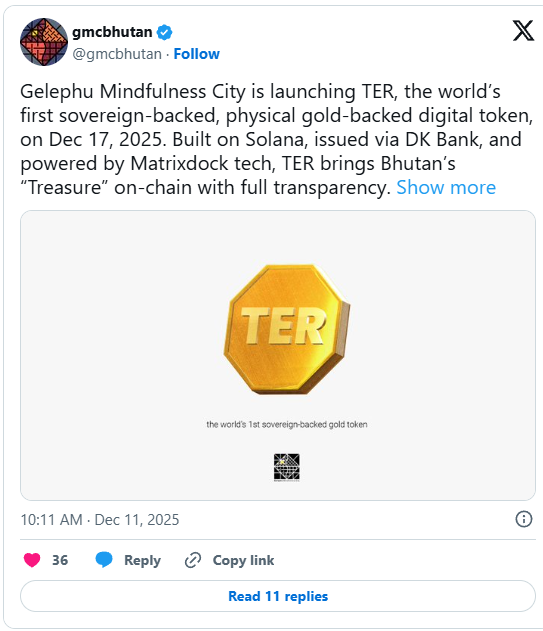
Beyond serving as a new form of investment, TER reflects Bhutan’s broader ambition to build a sovereign-driven digital finance ecosystem anchored in audited reserves, regulatory oversight, and institutional-grade safeguards.
DK Bank’s licensed and compliant infrastructure plays a central role in this effort, offering both domestic and international investors reliable custody, transparent reporting, and confidence that the token operates within a regulated environment.
On the technical front, Solana’s high-speed, low-cost, and energy-efficient blockchain forms the backbone of the TER token. Officials noted that Solana’s performance, scalability, and sustainability were key factors in choosing it as the foundation for the country’s flagship digital asset.
The launch of TER also aligns with Bhutan’s wider national strategy of exploring and deploying advanced digital technologies. Over the past few years, the Kingdom has integrated digital assets into its strategic reserves, launched blockchain-powered identity programs, enabled crypto-based payment solutions, and even leveraged surplus hydropower to mine Bitcoin.
TER now becomes the newest milestone in this evolving roadmap, placing Bhutan among the leading nations experimenting with state-backed tokenized assets.
SC Ventures-Backed Libeara Unveils Tokenized Gold Fund
In a parallel development, Libeara, the blockchain infrastructure platform supported by Standard Chartered’s venture arm SC Ventures, launched a tokenized gold investment fund in Singapore on Monday—bringing one of the world’s oldest safe-haven assets into the digital realm.
Created in partnership with FundBridge Capital, the fund enables professional investors to gain exposure to gold through blockchain-issued tokens recorded on Libeara’s proprietary ledger. This structure combines the traditional security of gold with the efficiency and programmability of digital assets.
Recent research from Web3 digital property company Animoca Brands highlighted the massive potential of real-world asset (RWA) tokenization, estimating that it could open the door to a $400 trillion traditional finance market. Researchers Andrew Ho and Ming Ruan emphasized that private credit, sovereign debt, commodities, equities, alternative funds, and bonds all offer massive opportunities for blockchain-based transformation.
“The estimated $400 trillion addressable TradFi market underscores the potential growth runway for RWA tokenization,” they noted.
Additionally, the 2025 Skynet RWA Security Report projects that the tokenized RWA sector could surge to $16 trillion by 2030, signaling accelerating global adoption and institutional interest.