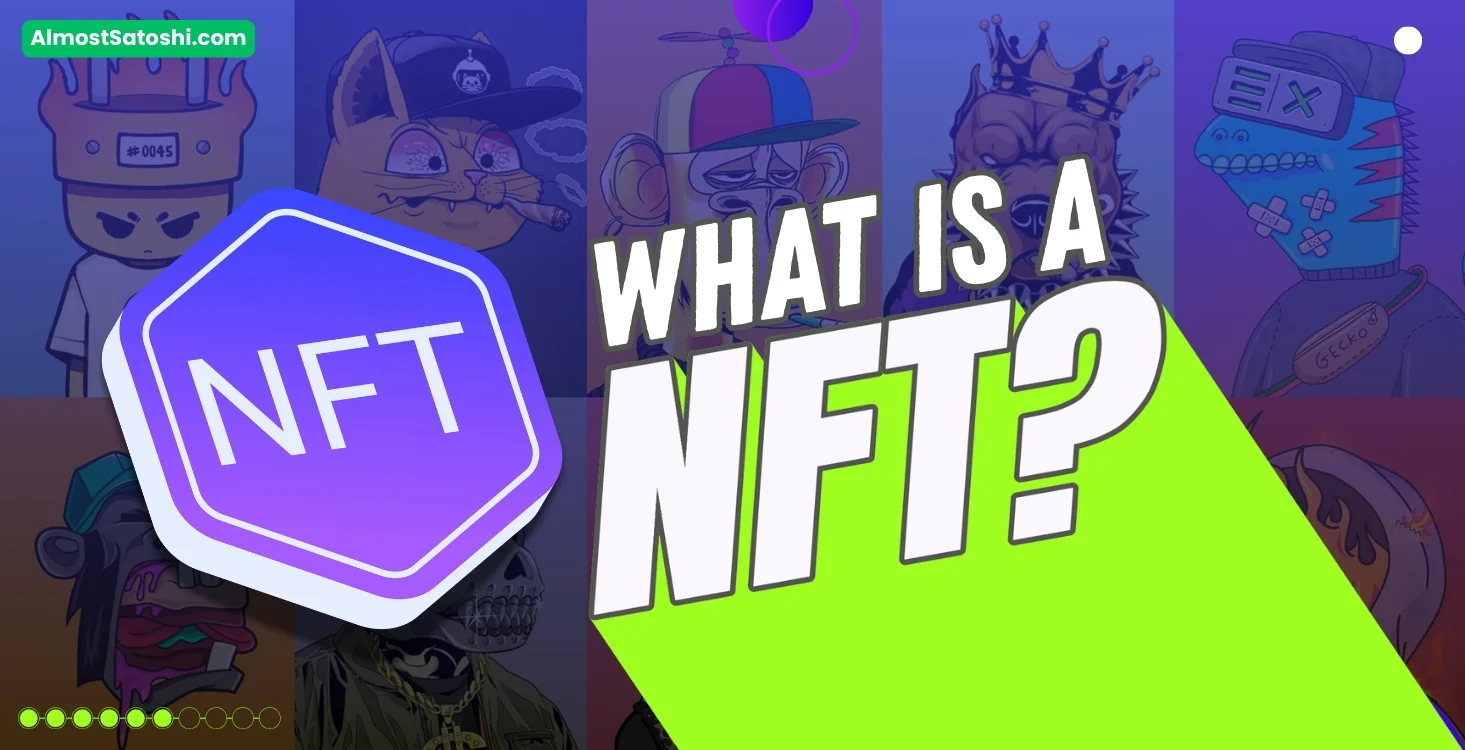
A Non-Fungible Token (NFT) has emerged as a revolutionary concept in the digital world. Cryptocurrencies such as Bitcoin are interchangeable and hold the same value, while NFTs are unique digital assets that prove ownership of a specific item, artwork, or piece of content.
Each NFT is one-of-a-kind and cannot be replaced by another, making it ideal for representing digital art, music, collectibles, in-game items, and even virtual real estate.
By leveraging blockchain technology, NFTs provide secure, verifiable ownership, allowing creators and collectors to trade, sell, or showcase digital assets in ways that were never possible before.
The rise of NFT in crypto has sparked massive interest among artists, collectors, investors, and gamers. As blockchain technology continues to advance, understanding what is NFT and how it works is essential for anyone looking to explore the digital economy.
In this guide, we’ll break down NFT meaning, explore its key features and use cases, and explain how to safely buy, sell, and invest in NFTs.
Understanding NFTs
A Non-Fungible Token (NFT) is a digital certificate of ownership stored securely on a blockchain. Traditional cryptocurrencies such as Bitcoin or Ethereum are fungible and interchangeable, whereas each NFT is unique and cannot be replaced by another token.
NFTs can represent a wide range of digital assets, including artwork, music, videos, collectibles, and even virtual real estate. The ownership and authenticity of each NFT are recorded on the blockchain, ensuring transparency, security, and immutability.
The rise of NFTs has created exciting new opportunities for creators and collectors alike. Artists can sell their digital artwork directly to buyers, gamers can own and trade in-game assets, and musicians can release limited-edition albums as NFTs.
This innovation has fostered a thriving ecosystem of digital ownership that goes far beyond traditional financial assets, reshaping how we perceive value in the digital world.
What Does Non-Fungible Mean?
To understand NFTs you first need to know what non-fungible means.
Fungible assets: Fungible assents are items that are exactly the same as others and can be exchanged easily. For example, one Bitcoin is equal to any other Bitcoin, and a $10 bill can be swapped for another $10 bill without losing value.
These assets are interchangeable because each unit has the same worth. In short, fungible means “replaceable.” You don’t care which one you have, as they all hold the same value and function the same way.
Non-fungible assets Non-fungible assets like NFTs are one-of-a-kind digital items. Bitcoin or money can be exchanged easily but each NFT is unique and cannot be replaced by another.
Its value depends on how rare it is who created it and how much people want it. Think of it like a famous painting no two are the same and its worth comes from its uniqueness. NFTs work the same way in the digital world.
Non-Fungible vs. Fungible
Understanding the difference between fungible and non-fungible assets is key to grasping NFT meaning:
| Feature | Fungible | Non-Fungible |
| Interchangeable | Yes | No |
| Example | Bitcoin, Dollar | NFT art, Collectibles |
| Uniqueness | Identical | Unique |
| Value | Uniform | Varies |
How Do NFTs Work?
NFTs work using blockchain technology, which makes them secure, transparent, and decentralized. Most NFTs are created on the Ethereum blockchain, and others like Solana and Polygon also support them.
To create an NFT, a digital asset is uploaded to a blockchain in a process called minting, which generates a unique token representing ownership. Each NFT has a unique identifier stored on the blockchain, proving its authenticity.
NFTs can be bought and sold on online marketplaces, with all transactions recorded for transparency. Smart contracts automate ownership rules, royalties, and conditions, ensuring secure and tamper-proof digital ownership for buyers and creators.
Key Features of NFTs
NFTs have several distinct features that set them apart from traditional digital assets:
Uniqueness
Every NFT is one of a kind and no two tokens are the same. This uniqueness is stored on the blockchain which proves authenticity. Because each NFT is different it cannot be copied making it rare and valuable for collectors and creators in the digital world.
Ownership Proof
When you own an NFT the blockchain keeps a permanent record showing you are the owner. This record cannot be changed or deleted. Owning an NFT is like having a digital certificate that proves you truly own the asset and can sell or transfer it securely.
Transparency
NFT transactions are recorded on the blockchain for everyone to see. This means anyone can check who owns an NFT and its history. It makes ownership clear and easy to verify. Transparency helps buyers trust that the NFT is authentic and its value is genuine.
Interoperability
Interoperability means many NFTs can be used on different platforms, games or virtual worlds. This makes them flexible digital assets that can move between applications. For example a character or item you own in one game can be used or traded in another supported game or virtual space.
Popular Use Cases of NFTs
NFTs have a wide range of applications across industries. Here are some of the most popular NFT use cases:
Digital Art
Artists can turn their digital creations into NFTs and sell them online. Each NFT proves ownership and authenticity. Whenever the artwork is resold, the original artist can earn royalties automatically. This allows creators to make money from their work and reach collectors all over the world.
Gaming
NFTs are changing gaming by letting players truly own in-game items like skins, weapons or characters. These items are unique and can be traded, sold or used across different games giving players more control and value over their digital assets.
Music & Entertainment
Musicians and entertainers are using NFTs to sell digital albums, concert tickets, and special experiences. This allows fans to own unique items and gives creators new ways to earn money. NFTs help artists connect directly with their audience and offer exclusive content that cannot be copied or replaced.
Real Estate & Metaverse
Virtual land and digital properties in the metaverse are being sold as NFTs. Buyers can own these assets and have full control to trade them or develop them. This allows people to invest in digital real estate and participate in virtual worlds in new and creative ways.
How Can I Buy NFTs?
Buying NFTs is simpler than it sounds but beginners should follow a few essential steps:
Choose a Wallet: You need a cryptocurrency wallet like MetaMask to safely keep your NFTs and cryptocurrencies
Add Cryptocurrency: Most NFTs are bought using Ethereum or other types of cryptocurrency that the marketplace supports.
Select a Marketplace: You can use a marketplace like OpenSea Rarible or Mintable to look at NFTs and buy or sell them.
Purchase the NFT: Once you find an NFT you like you can buy it by following the steps on the marketplace and then it will be safely transferred to your wallet.
Advantages and Disadvantages of NFTs
Advantages
- Ownership and authenticity: NFTs provide verifiable proof of ownership.
- Monetization for creators: Artists, musicians, and creators can earn directly from their work.
- Scarcity and uniqueness: NFTs create digital scarcity, increasing value for collectors.
- Royalties and smart contracts: Creators can earn royalties automatically on secondary sales.
Disadvantages
- Volatility: NFT prices can fluctuate widely.
- Scams and frauds: Fake NFTs or phishing attempts can target buyers.
- Environmental impact: High-energy blockchains like Ethereum contribute to carbon emissions.
- Regulatory uncertainty: NFTs are still largely unregulated in many regions.
Are NFTs Safe?
NFTs are generally safe if you follow some basic security steps. Always use secure wallets like MetaMask or Ledger to store your NFTs. Before buying, make sure the marketplace is reliable and trustworthy.
Check the creator’s authenticity and the history of the NFT to avoid fake or copied assets. Be careful with links and emails to avoid phishing scams.
While the blockchain itself is secure and records ownership permanently, users must take precautions to protect their digital assets from theft or fraud. Following these steps helps ensure a safe experience with NFTs.
Conclusion
Non-Fungible Tokens are changing the way we think about digital ownership and creating new opportunities for creators, collectors and investors. NFTs provide unique verifiable ownership of digital assets which makes them an important part of the blockchain ecosystem.
They are used for digital art music gaming items and even virtual real estate allowing people to earn money and participate in the digital economy. Although NFTs come with risks such as price changes and scams understanding what is NFT its main features and NFT use cases can help beginners make better decisions.
Platforms like almostsatoshi also provide insights and resources for NFT enthusiasts. As blockchain technology grows and the metaverse expands, NFTs will become more important offering a new way to own, create and trade digital assets.