
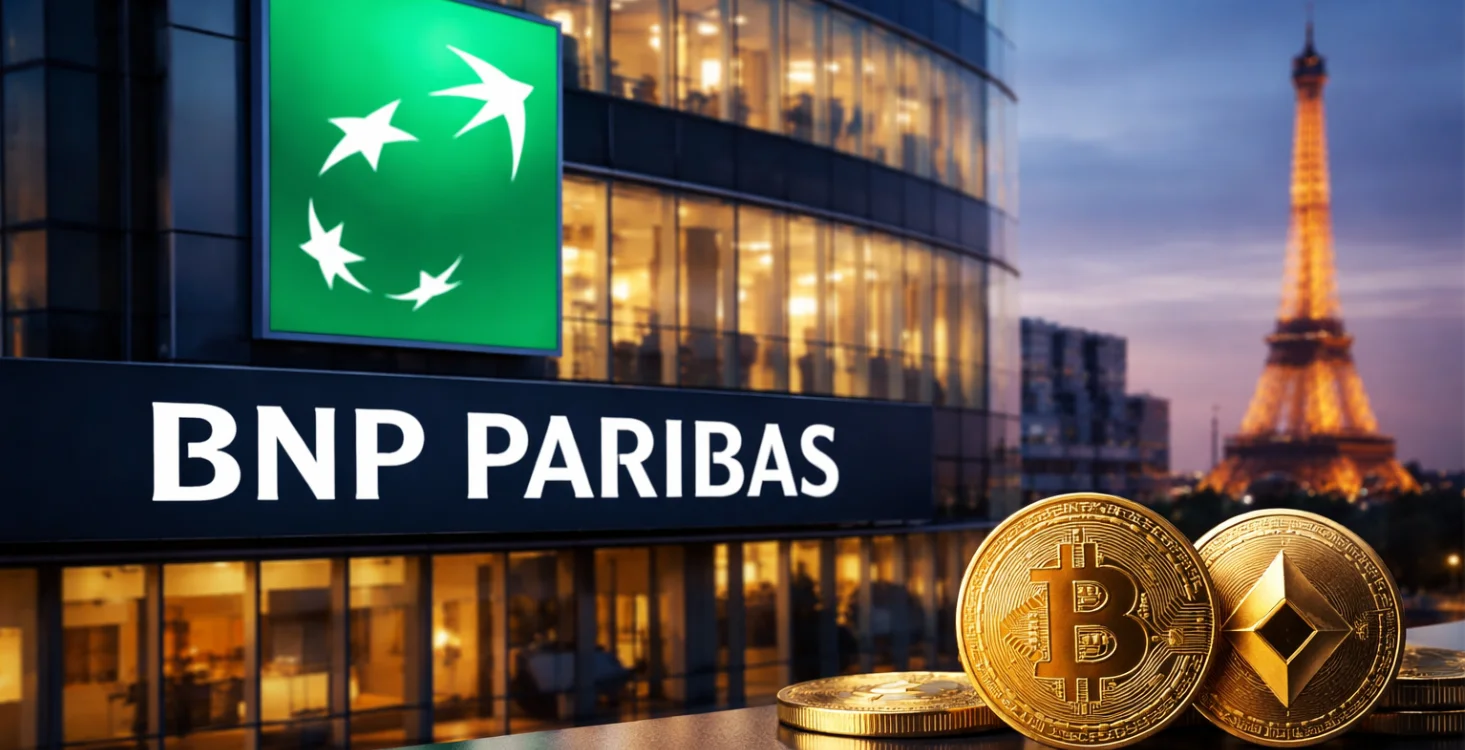
The European financial world is changing quickly as more traditional banks start using digital assets. BNP Paribas, one of the biggest banks in France, has announced that it will launch six exchange-traded notes (ETNs) linked to cryptocurrencies.
These products will allow investors to benefit from the price movements of crypto without actually buying or holding it.
This is an important step because it makes crypto investing easier and more accessible for everyday people. Instead of dealing with complex wallets or exchanges, investors can use regular banking services.
Overall, this move helps connect traditional banking with the growing world of digital currencies, showing how finance is adapting to new technology and changing investor needs.
What BNP Paribas Is Offering
BNP Paribas is launching six new exchange-traded notes (ETNs) linked to two major cryptocurrencies: Bitcoin and Ethereum. These ETNs will let investors track the performance of these digital assets without actually owning them.
Starting March 30, the products will be available to a wide range of retail clients in France, including individual investors, entrepreneurs, private banking clients, and Hello bank! users.
The main advantage of these ETNs is that they provide indirect exposure to cryptocurrency price movements.
This means everyday investors can benefit from changes in Bitcoin and Ethereum prices without the complexity of setting up crypto wallets, managing private keys or worrying about storing digital currencies safely. It’s a simple way to invest in crypto through a regulated banking product.
Understanding ETNs: How They Work
Exchange-Traded Notes (ETNs) are financial products that let you invest in an asset, like Bitcoin or Ethereum, without actually owning it. They are unsecured debt instruments, which means the return depends on the performance of the underlying asset and the issuer’s reliability.
Key things to know:
- You don’t hold the crypto directly
- Your returns reflect market price changes
- Investments are made through regular brokerage or bank accounts
However, there is a risk: if the ETN issuer faces financial problems, you could lose money, even if the crypto performs well.
Related: Coinbase Survey Shows Most Investors Confused About Crypto Tax
Regulatory Compliance and Investor Protection
BNP Paribas has made it clear that its new Bitcoin and Ethereum ETNs follow MiFID II regulations, which are rules designed to protect investors in Europe.
These rules make sure that the investment products are transparent, meaning investors can clearly see how they work and what risks are involved.
They also require the bank to provide full details about potential risks, fees, and how the ETNs are managed.
By following these regulations, BNP Paribas ensures that investors can trust the products and feel confident when investing, even if they are new to cryptocurrencies or digital assets.
Limited Details on Issuers and Fees
BNP Paribas has not shared all the details about its new ETNs yet. The bank has not revealed which asset managers will issue these products, what the fee structures will be, or the exact cryptocurrency indices the ETNs will follow.
Investors should note that this information is important because it helps them understand costs and potential returns.
However, BNP Paribas has stated that the issuers were carefully chosen based on their strong financial stability and effective risk management systems. This selection aims to provide investors with a safer and more reliable way to gain exposure to Bitcoin and Ethereum.
Future Expansion Plans
Currently, BNP Paribas is offering its new ETNs only to clients in France, but the bank plans to make them available to international wealth management customers in the future. No official timeline has been provided for this global expansion.
This move is part of a bigger trend where European banks are increasingly exploring blockchain and crypto solutions.
Recent steps include tokenizing a money market fund on the Ethereum network, joining a consortium to create a euro-backed stablecoin, and receiving authorization from REGAFI under the EU’s MiCA regulation. These efforts show that traditional banks are steadily adopting digital assets across Europe.