
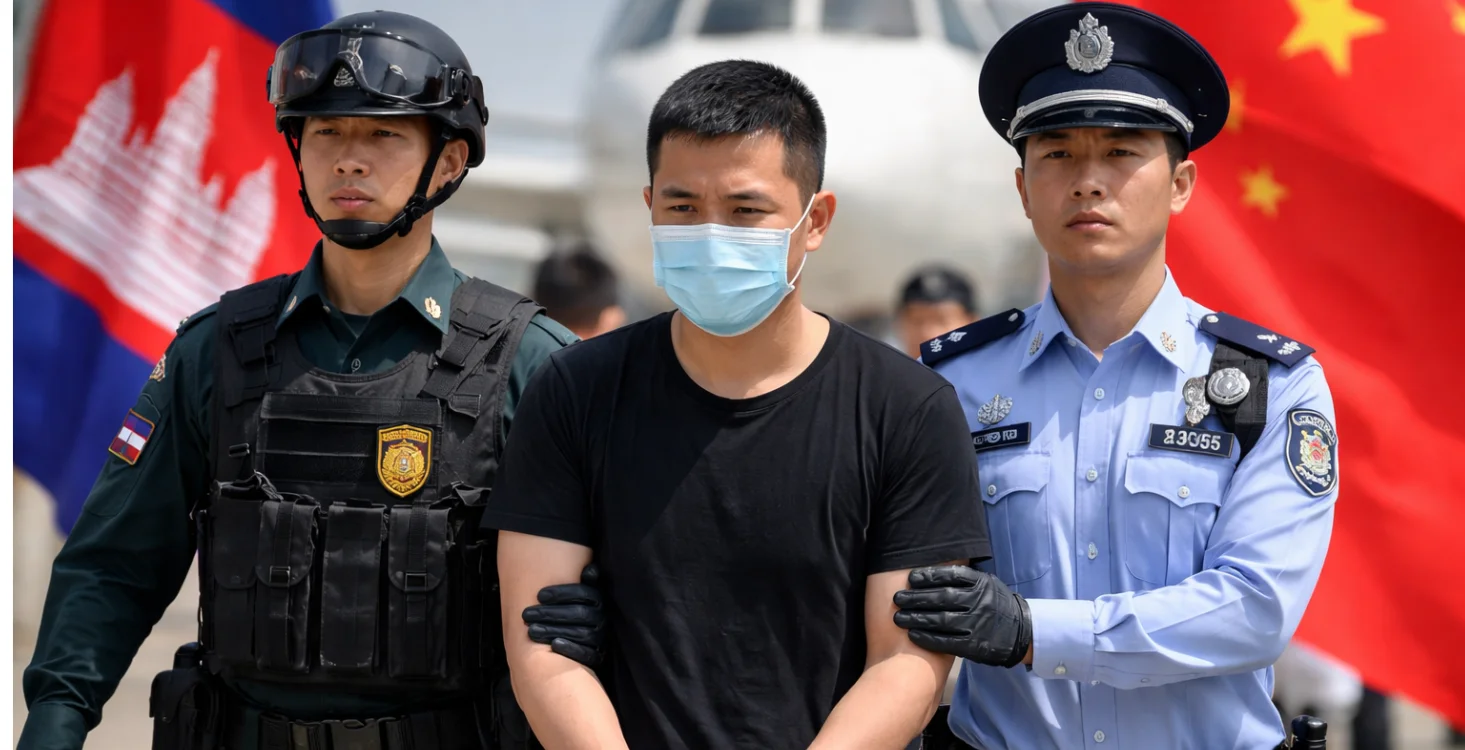
Chinese authorities have taken a big step to fight international cybercrime by bringing back a key suspect linked to major cryptocurrency scams. The person, Li Xiong, was a former senior leader of the Cambodia-based Huione Group.
This company has been accused of helping criminals move illegal money across different countries. Authorities believe the group played an important role in online fraud and financial crimes involving digital currencies.
By extraditing Li Xiong to China, officials aim to strengthen their investigation and take stricter action against large-scale cybercrime networks that target people worldwide through scams and illegal crypto activities.
Arrest Linked to Massive Crypto Fraud Network
According to China’s Ministry of Public Security, Li Xiong is believed to be a key member of a criminal network involved in online gambling, fraud and cyber scams. Investigators say the Huione Group was active in different areas such as e-commerce, digital payments and cryptocurrency services.
These services made it easier for criminals to move illegal money without being noticed. Authorities believe this system helped scam networks grow quickly and operate on a larger scale.
It allowed them to collect money from victims and transfer it across borders with less risk. Many of these scams targeted people from different countries, making the issue global.
Officials say such networks use advanced methods to hide their activities, which makes tracking and stopping them more difficult for law enforcement agencies.
U.S. Flags Huione as Major Money Laundering Entity
The Huione Group has come under attention from U.S. authorities due to its suspected involvement in illegal financial activities.
The Financial Crimes Enforcement Network (FinCEN), which operates under the U.S. Treasury Department, has identified the company as a major concern for money laundering. This means officials believe the platform may have been used to move and hide illegal money.
According to reports, between August 2021 and January 2025, more than $4 billion may have passed through its systems. These funds were reportedly linked to online scams, stolen money, and other cybercrime activities.
Around 127,000 Bitcoin (BTC) linked to this network was seized by U.S. authorities, showing how large and serious this operation was.This has raised major concerns among global regulators, highlighting the growing risks in the cryptocurrency space.
More: Genius Group Sells Bitcoin to Clear Debt Eyes Rebuild
Southeast Asia’s Scam Ecosystem
Experts say Huione played an important role in supporting scam activities across Southeast Asia. The company worked like a financial bridge, helping criminals move money from scams through payment services and cryptocurrency platforms. This made it easier for fraudsters to send and hide illegal funds.
Analysts have found that billions of dollars passed through networks linked to Huione, many connected to fraud cases. Because of this, such platforms become useful tools for cybercriminals. They help different scam groups operate smoothly and handle money without getting caught easily.
Rising Threat of Cyber Scam Compounds
Southeast Asia is becoming a major center for cybercrime, especially online scams. Many of these scams are run from special compounds where people are forced or pressured to work. These workers are made to trick victims through fake cryptocurrency investments and romance scams, targeting people from different countries.
Organizations like Interpol have warned that these scam centers are a serious global threat. They are not only involved in online fraud but are also linked to human trafficking and financial exploitation, making the issue even more dangerous.
The extradition of Li Xiong is part of a larger crackdown on these criminal networks. Governments are now working together to stop such activities. Authorities have also taken action against other individuals connected to similar scams, especially those linked to large business groups facing legal trouble in multiple countries.