
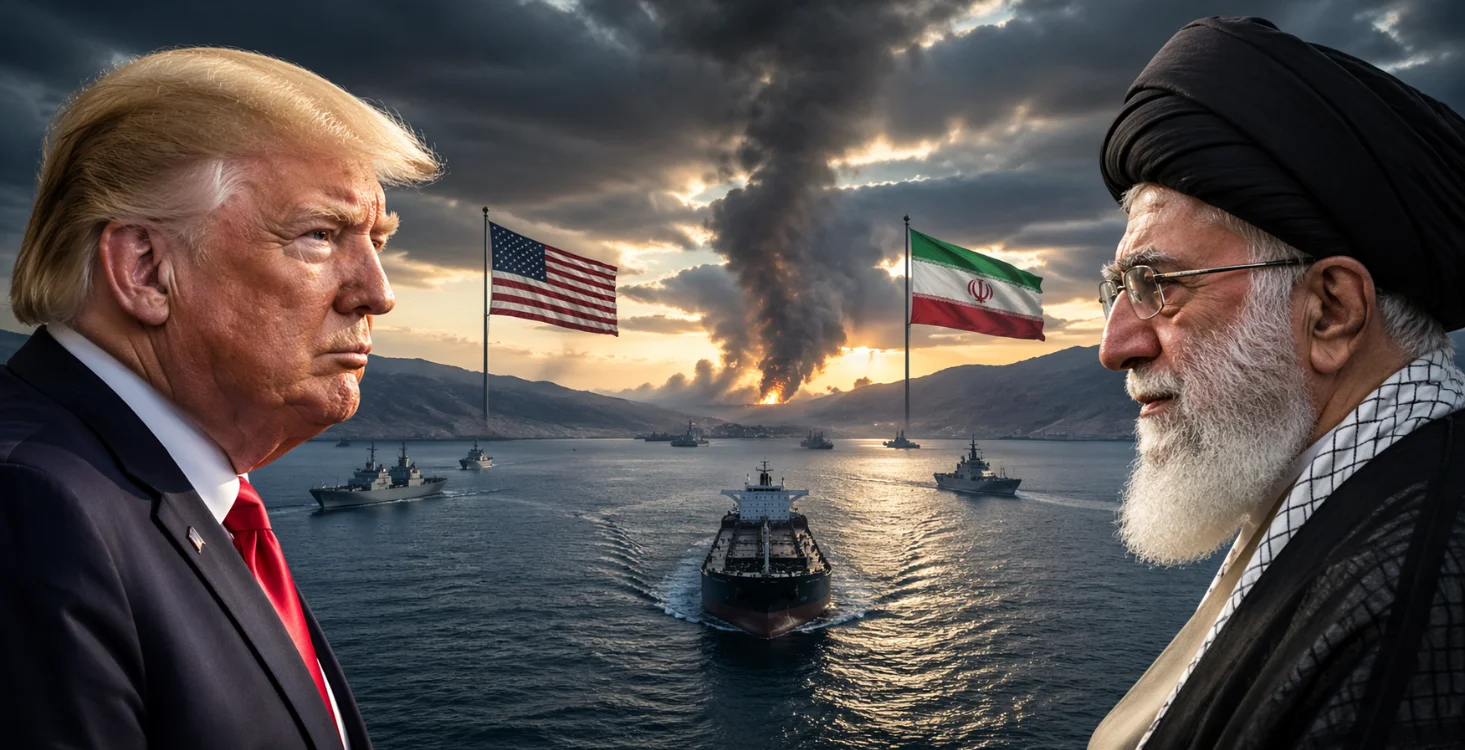
Tensions between the United States and Iran have increased after both countries accused each other of breaking a temporary ceasefire agreement. This deal was made to reduce conflict in the region, but it is now at risk of falling apart.
The ceasefire was agreed on April 8 and was meant to last for a short time. During this period, both sides were expected to avoid direct attacks and keep important sea routes, especially the Strait of Hormuz, safe and open for shipping.
However, the situation has become more serious as both Washington and Tehran continue to blame each other for breaking the agreement. With less than 24 hours left before the ceasefire expires, there is growing uncertainty about whether peace talks can continue or if tensions will rise further.
Mutual Accusations of Ceasefire Violations
On Tuesday, U.S. President Donald Trump said that Iran has broken the ceasefire agreement several times. He shared this message on Truth Social and claimed that Iran violated the truce “many times.” However, he did not give any clear proof or details about these claims.
Iran quickly rejected these accusations. The Iranian military said that the United States is actually the one increasing tensions. They pointed to an incident in the Gulf of Oman, where a U.S. warship reportedly fired at an Iranian cargo ship. Iran said this action goes against the ceasefire agreement.
Iran also warned that it may respond if such incidents happen again. They said they will not stay silent if their ships are attacked.
Because of these claims from both sides, tensions between the U.S. and Iran have increased again. This is happening at a time when both countries were expected to reduce conflict and keep important sea routes open for international trade.
The situation has now become more serious, and there is concern that the ceasefire may not last if both sides continue blaming each other.
Strait of Hormuz at the Center of Tensions
The Strait of Hormuz is a very important sea route for global oil trade. As part of the ceasefire agreement, Iran agreed to keep this route open for international shipping. Many countries depend on this waterway because a large amount of the world’s oil passes through it every day.
However, recent tensions have raised concerns about whether this agreement will hold. If the Strait of Hormuz is blocked or disturbed, it could affect global oil supply, increase fuel prices, and create economic problems around the world.
Experts warn that rising military tensions may lead to bigger global issues.
Market Reaction and Bitcoin Volatility
Financial markets quickly reacted to rising tensions between the US and Iran. After comments from Donald Trump, Bitcoin briefly fell from around $76,500 to $75,709. However, it later recovered and stabilized near $75,900, still showing a small 1% gain for the day, according to CoinGecko.
This price movement shows how sensitive crypto markets are to global political news. When there is uncertainty or conflict between major countries, investors often react quickly, leading to price changes. Traders are now closely watching the situation between the US and Iran, as it could cause more ups and downs in the market.
Trump Signals Confidence in a Possible Deal
President Trump expressed optimism during an interview on CNBC’s Squawk Box. He suggested that the United States could still secure what he described as a “great deal” with Iran to formally end the conflict.
According to Trump, Iran’s military infrastructure and leadership have been significantly weakened, leaving negotiations as the only viable path forward. He claimed that U.S. forces had already “taken out” much of Iran’s navy, air force, and senior military leadership, which he described as resulting in an indirect form of regime pressure.
Trump further stated that Iran’s current leadership appears more “rational” compared to the past and suggested that this shift could open the door for meaningful diplomatic engagement. He emphasized that Iran has limited options and will ultimately need to return to the negotiating table.