
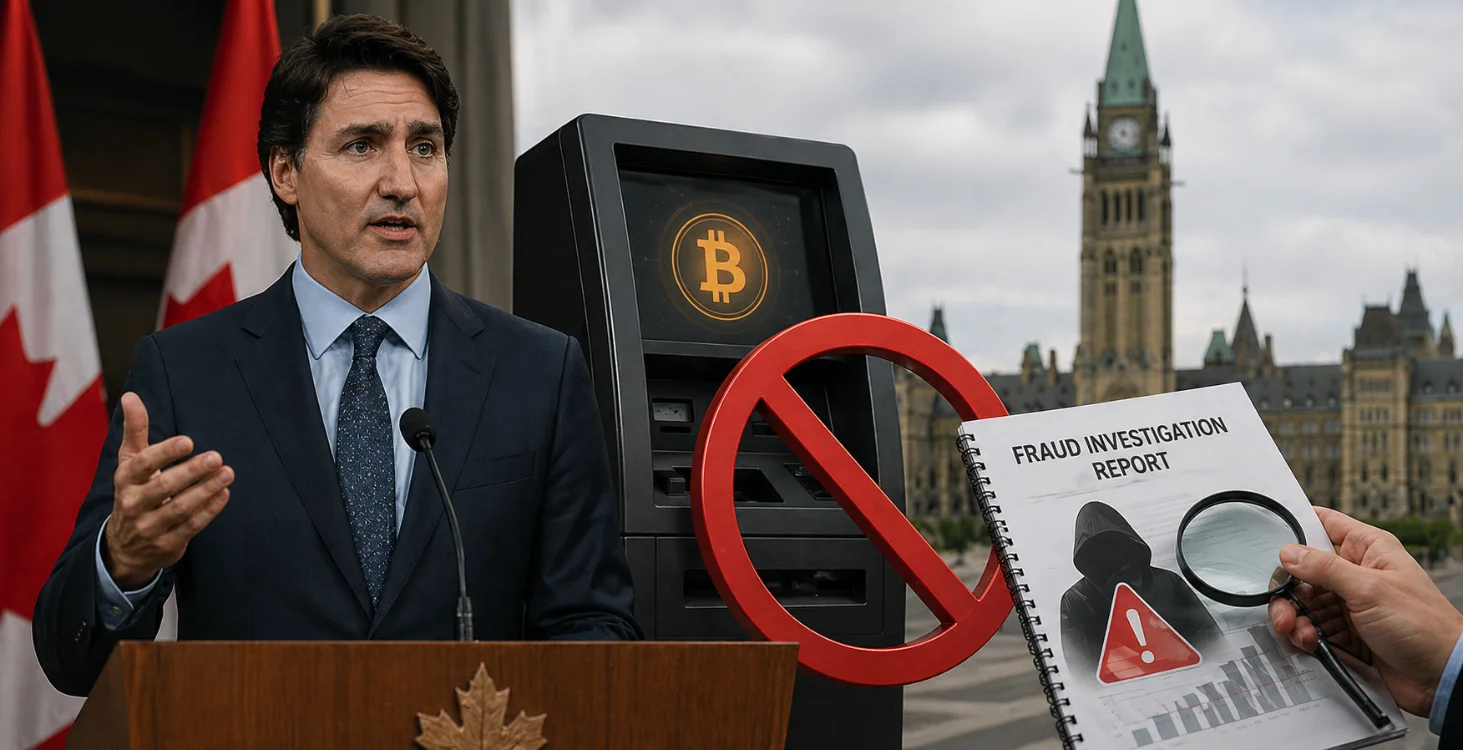
Canada’s federal government is preparing to ban crypto ATMs in response to a surge in fraud cases, according to a CBC News report. Authorities believe these machines are being increasingly exploited by scammers to collect funds from victims and transfer illicit money.
Crypto ATMs allow users to convert cash into cryptocurrency by scanning a wallet QR code, enabling digital transfers instead of physical cash dispensing like traditional ATMs.
While they offer fast transactions and require minimal verification, these same features make them highly vulnerable to misuse.
Rising Fraud Linked to Crypto ATMs in Canada
Authorities and media reports have highlighted a concerning rise in scams involving crypto ATMs across Canada. Fraudsters often manipulate victims, particularly seniors, into depositing large sums of cash into these machines.
In many reported cases, victims are convinced over phone calls or online messages that their money is at risk and must be “secured” by converting it into cryptocurrency. Once the cash is deposited, it is quickly transferred to wallets controlled by scammers, making recovery extremely difficult.
These incidents have led to significant financial losses, with some victims reportedly losing their retirement savings.
See Also: Crypto Bottom May Be Near as Coinbase Warns of Recession Risk
Canada’s Crypto ATM Landscape
Canada currently has nearly 4,000 crypto ATMs making it one of the countries with the highest concentration of such machines per capita globally according to data from Coin ATM Radar.
Despite this widespread presence the industry has not been governed by a dedicated regulatory framework. Instead crypto ATMs have been classified under a broader category known as “money services businesses” which also includes services like currency exchange counters and international remittance providers.
Critics argue that this lack of specific oversight has allowed misuse to grow unchecked contributing to the rise in fraud cases.
Government Response and Planned Ban
While the federal government has not released full details of the proposed ban, officials have indicated that Canadians will still be able to purchase cryptocurrency through regulated in-person financial services.
The goal according to policymakers is to reduce scam activity while ensuring continued access to legitimate crypto trading channels under stronger regulatory oversight.
Authorities believe that tighter rules will help limit the misuse of crypto ATMs, which have been frequently linked to fraud cases across the country.
The announcement also reflects a broader shift in Canada’s approach toward digital assets as global regulators move toward stricter controls on cryptocurrency transactions to improve consumer protection and financial security.
More: Grayscale and Bitmine Invest $500M in Ethereum
Global Trends: Other Countries Tighten Crypto ATM Rules
Canada is not alone in taking action against crypto ATMs. Several countries have already introduced strict regulations or outright bans due to fraud and money laundering concerns.
United Kingdom
The UK effectively restricted crypto ATMs in 2021 by requiring all operators to register with the Financial Conduct Authority (FCA). As of 2026, no operator has obtained approval, effectively making the machines illegal in practice.
New Zealand
New Zealand has moved toward a full ban on crypto ATMs as part of broader anti-money-laundering reforms. The country is also enforcing limits on cash transfer sizes.
Australia
Australia has adopted a more moderate approach. In 2025, its financial intelligence agency AUSTRAC introduced transaction caps on crypto ATMs after reviewing fraud risks and consumer safety concerns.
United States
In the US, regulation varies by state. Around half of the states have proposed or implemented rules such as daily spending limits, mandatory fee disclosures, and partial reimbursement requirements for scam victims. The FBI reported that Americans lost more than $333 million to crypto ATM-related scams in 2025 alone, highlighting the scale of the issue.
Legal Actions and Industry Impact
Regulators have also taken direct action against crypto ATM operators. For example, Maine recently reached a 1.9 million dollar settlement with Bitcoin Depot, one of the largest operators, over allegations that its machines facilitated fraudulent activity.
In Canada companies such as Bitcoin Well and Localcoin operate hundreds of crypto ATMs nationwide. An outright ban would significantly impact their business models and could reshape the country’s crypto access landscape. The move could also reduce physical access points for crypto users while increasing reliance on regulated exchanges.
Industry experts suggest that stricter rules may force operators to adapt quickly or exit the market entirely as enforcement becomes more aggressive in the sector.
Impact on Users and Future Outlook
While regulators focus on preventing fraud, some users believe that a ban on crypto ATMs could reduce financial access, especially for people who depend on cash for crypto services.
In Canada, many banks already restrict or block transfers to cryptocurrency exchanges, which makes crypto ATMs one of the few remaining ways for some individuals to enter the crypto market.
As the government considers stricter regulations, it faces the challenge of finding the right balance between protecting consumers from scams and ensuring financial accessibility. This issue highlights the growing tension in the evolving digital economy and its regulation.