

The White House has completed its review of a proposal that could allow cryptocurrencies, including Bitcoin (BTC), and private equity investments in 401(k) retirement plans. If approved, this change could open up $13.9–$14 trillion from retirement accounts to digital assets offering Americans new ways to grow their savings.
The proposal is now waiting for a formal decision from the Department of Labor (DOL). A positive ruling would make it safer and more acceptable for retirement funds to include crypto, moving these investments from a cautious approach to mainstream adoption.
Experts say this could boost the legitimacy of cryptocurrencies and increase demand for digital assets. While it may take time for firms to adopt the changes, the move represents a major step forward for integrating crypto into retirement planning.
Bitcoin and Cryptocurrencies in Retirement Plans
The White House recently cleared the way for cryptocurrencies like Bitcoin to be included in 401(k) retirement plans. This follows an August 2025 executive order directing the Department of Labor (DOL) to ease rules on alternative investments, such as private equity, real estate, infrastructure, commodities, and cryptocurrencies.
While Bitcoin is already allowed under the Employee Retirement Income Security Act (ERISA) of 1974, a positive ruling from the DOL would signal a more supportive approach toward crypto in retirement portfolios.
In the past, the Biden administration had cautioned against adding digital assets to retirement plans because of their high volatility and potential risk to funds. However, in May 2025, the policy shifted to support crypto, reflecting the Trump administration’s goal of making the U.S. a leading hub for Bitcoin and cryptocurrency investments.
This change could make it easier for Americans to diversify their retirement savings with digital assets.
Community Response to Crypto in 401(k)s
The news of allowing crypto in 401(k) plans has received mixed reactions. Supporters say it gives people easier access to high-return digital assets like Bitcoin, which can help grow their retirement savings and protect against inflation.
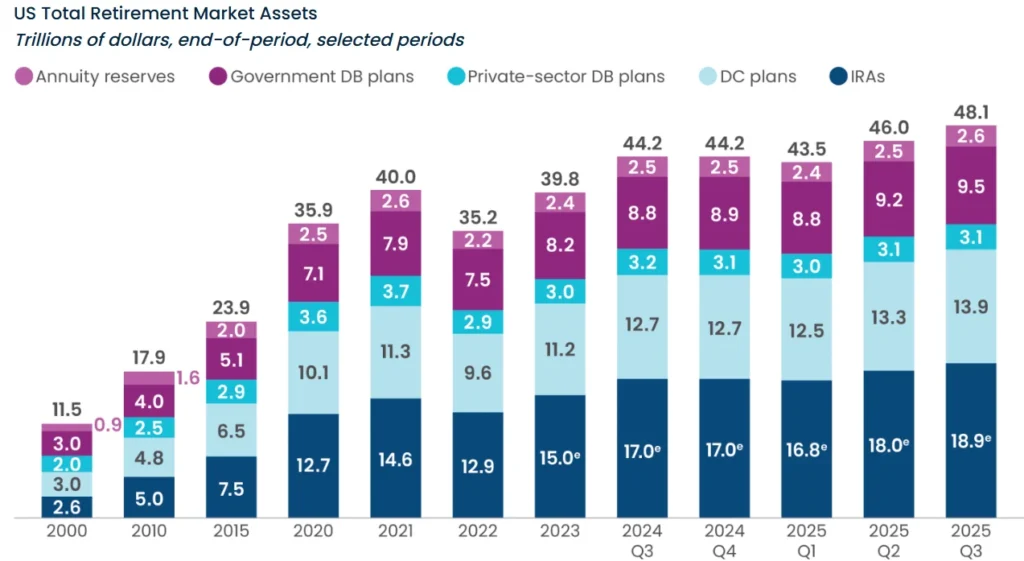
Source: ici.org
They see it as a chance for higher long-term profits. On the other hand, critics warn that retirement companies usually focus on safe and stable investments, so they may be slow to adopt cryptocurrencies.
They also note that digital assets and private equity can be risky or hard to sell, making cautious adoption likely in the beginning.
What’s Next for Crypto in Retirement Plans?
Currently, the Department of Labor (DOL) is neutral about adding cryptocurrencies like Bitcoin to retirement accounts. Once the DOL issues its ruling, there will be a public comment period, allowing experts, firms, and investors to share their opinions before a final decision is made.
If the ruling is positive, retirement plan managers (fiduciaries) will receive legal protection. This means they can safely include Bitcoin and other cryptocurrencies in 401(k) plans without fear of lawsuits or penalties.
However, implementing crypto in retirement plans won’t happen overnight. Retirement firms will need time to evaluate the benefits, create the necessary systems, and follow compliance rules. Once everything is ready, digital assets could become a normal part of retirement portfolios, giving investors new ways to grow their savings.